
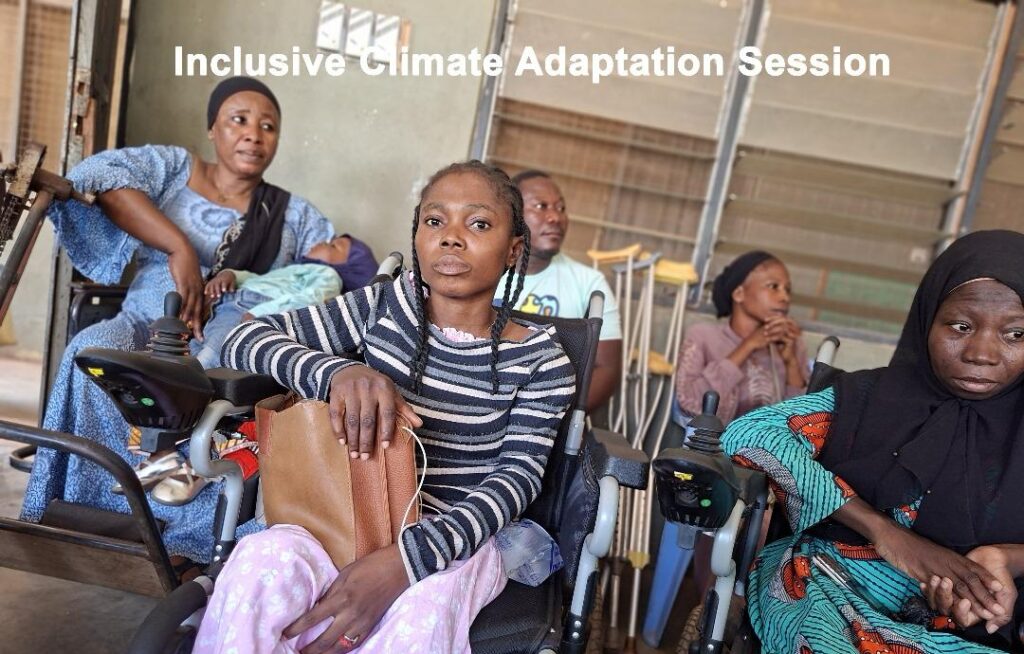
A day’s capacity-building training has been held in Tamale to empower persons with physical disabilities with knowledge and skills to adapt to the growing impacts of climate change.
The training, organised by the Centre for Opportunities and Rural Development (CORD Ghana) in collaboration with Naglogu Care Foundation, Rural Connect, Youth Alliance for Climate and Environmental Sustainability (YACES), the Network of Youth for Climate Action Africa, and the Association of Persons with Physical Disabilities, brought together 60 participants with diverse physical disabilities.
The training session equipped participants with inclusive climate adaptation strategies, focusing on accessible technologies, advocacy skills, and leadership roles persons with disabilities (PwDs) can assume in their communities.
It also highlighted the importance of integrating disability perspectives into climate action to ensure no one is left behind.
Madam Esther Nyamekye Opoku, Programmes Director at CORD Ghana during the training, emphasized the crucial role of PwDs in contributing to the Sustainable Development Goals (SDGs), referencing SDG 5 (Gender Equality), SDG 10 (Reduced Inequalities), SDG 11 (Sustainable Cities and Communities), SDG 12 (Responsible Consumption and Production), SDG 13 (Climate Action) and SDG 17 (Partnerships for the Goals). She stressed that inclusive climate actions are essential to achieving long-term national and global development goals.
She explained that “Climate change affects all, but persons with disabilities are disproportionately impacted. We need to ensure their voices are heard and their needs are met.”
Madam Esther said the training was strategically organized to give PwDs the skills and confidence to take action on climate change adaptation in their communities.
Mr Courage Kojo, Education and Capacity Building Officer at YACES Ghana, underscored the pivotal role of capacity building in empowering PwDs to actively participate in climate resilience initiatives.
He said creating opportunities for PwDs to acquire knowledge and practical skills enhances their ability to engage meaningfully in climate conversations and local adaptation initiatives. According to him, when PwDs fully understand climate risks and the tools available to manage them, they are better positioned to protect themselves and contribute to community resilience.
He added that capacity building breaks barriers that often limit PwDs’ inclusion in environmental governance. Through targeted training, awareness creation, and mentorship, organisations can help dismantle systemic obstacles that prevent PwDs from accessing vital climate information and resources. He stressed that empowering PwDs boosts their confidence and ensures that climate solutions reflect inclusivity and equity.
Mr Courage highlighted that strengthening the leadership potential of PwDs is a long-term investment in sustainable development. He said persons with disabilities possess unique perspectives that enrich adaptation planning, and empowering them to lead local initiatives which increases community-wide preparedness. He called for continuous skills development programmes to ensure PwDs remain informed and resilient in the face of climate uncertainties.
Ms Nuhu Radia, Founder and Chief Executive Officer of Naglogu Care Foundation and a person living with cerebral palsy, said PwDs continue to face structural challenges that heighten their vulnerability to climate change.
She mentioned limited access to climate information, inadequate social support systems, inaccessible infrastructure, and economic hardships as barriers that prevent PwDs from effectively responding to environmental shocks. She noted that climate adaptation frameworks must consider the specific needs of PwDs to achieve true resilience.
She called for stronger government interventions to close the inclusion gap. Ms Radia appealed for disability-friendly infrastructure, improved access to social protection schemes, and targeted climate adaptation programmes for PwDs.
She emphasized that inclusive policies supported with adequate funding would ensure that no one is pushed further into vulnerability as climate impacts intensify.
Mr Issahaku Abdul Fatawu, Tamale Metropolitan Chairman of Persons with Physical Disabilities, appealed to government and key stakeholders to prioritise disability inclusion in climate policies, planning and resource allocation. He said PwDs should not be consulted only after decisions are made, but must be included from the onset of programme design and implementation.
He thanked the Center for Opportunities and Rural Development (CORD Ghana) for leading this inclusive training program and empowering PwDs. He urged government agencies, development partners and local assemblies to support initiatives that equip PwDs with adaptation tools and livelihood opportunities.
Mr Abdul Fatawu with knowledge from the inclusive climate Adaptation session, also called for the provision of accessible early warning systems, disability-friendly emergency response mechanisms, and sustainable funding for organisations working with PwDs. He noted that empowering PwDs strengthens community resilience and accelerates national efforts to tackle climate change.
