
Project
Water Treatment Technologies
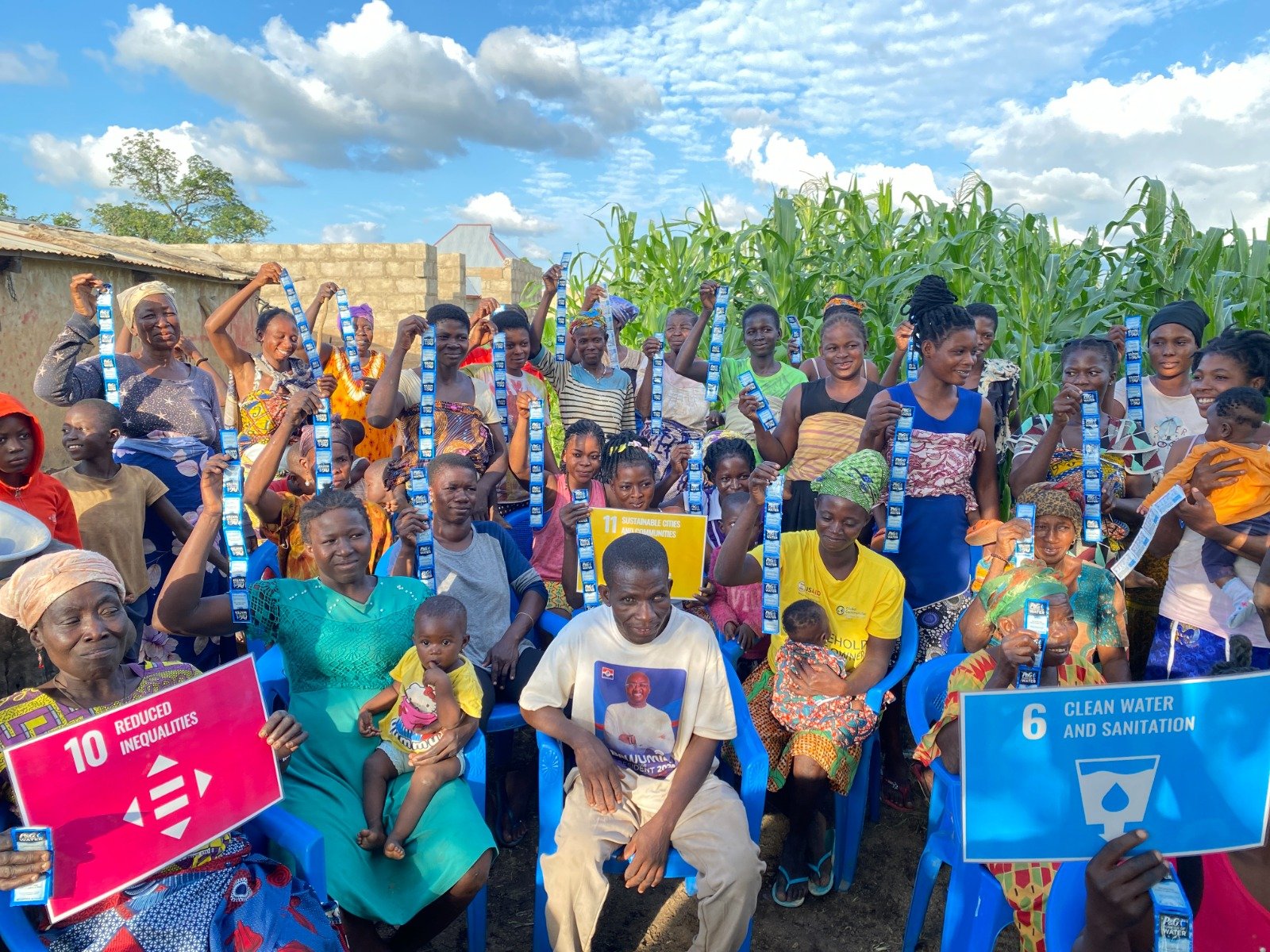
Training of communities on water quality, household water treatment, and inclusive handwashing facilities, in collaboration with World Vision Ghana.
Overview
The lack of clean drinking water and sanitation systems is a severe public health concern in Ghana. Widespread use of plastic drinking water sachets due to lack of available potable water has also led to increased plastic pollution, often polluting water bodies, choking stormwater drains and causing death of livestock.
CORD Ghana in collaboration with World Vision Ghana undertakes training of communities to engage households on water quality, equip them with water treatment technology, and train households on the construction of inclusive (including disability-friendly) hand washing facilities in the East Gonja APs.
Inclusive handwashing
Hand washing is considered as one of the most effective hygiene promotion activities for public health in developing countries. Hand washing with soap (HWWS) has been found to be more effective in removing germs than hand washing with water alone and yet hand washing with soap is seldom practiced.
A large population, especially in rural Ghana, suffer from diseases and lose their lives due to lack of toilets/hygienic toilets, lack of awareness of proper hand hygiene, and ignorance about concepts of wastewater management. The underlying problem of containing faecal-oral transmission is of prime importance, especially with the swathes of underprivileged populations in rural Ghana who have little or no access to toilets, soap, and/or clean water.
CORD Ghana engaged communities in East Gonja on practices on construction of disability friendly hand washing facilities, education on good hygiene to change their behavioral pattern and improve health of households especially children.